From Sweater Jacket to Cher Bears: A Lesson in Sustainable, Collaborative Upcycling
More Than Just A Sweater Jacket
The cultural landscape often prioritizes new clothes, yet the most profound stories are found in the clothing we have that we can’t bring ourselves to donate to a thrift store or throw away when a loved one passes away. For Chris Carpenter, that article of clothing is a red, extra-large Columbia fleece sweater jacket belonging to her late husband, Pastor Jeff Carpenter. I knew at that moment this craft project would do much more than honor a life well lived. We caught up via video and worked together on how the sweater would translate shared memories and experiences into lovable, huggable companions (That’s where my Cher Bears come in!).
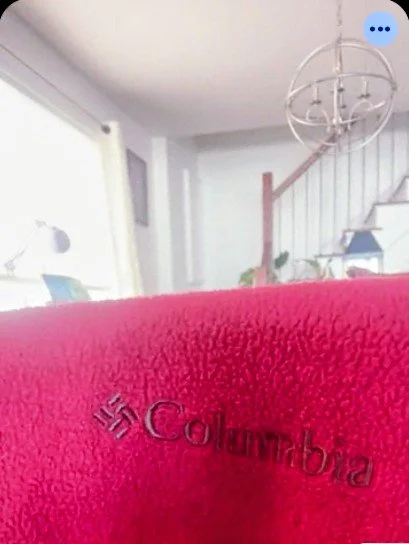
A screenshot of our interview of Chris Carpenter showing her late husband Jeff’s sweater jacket to me via video. She asked me to preserve the Columbia logo, shown here.
A package sent to me from Chris containing Pastor Jeff’s sweater, here on my doorstep.
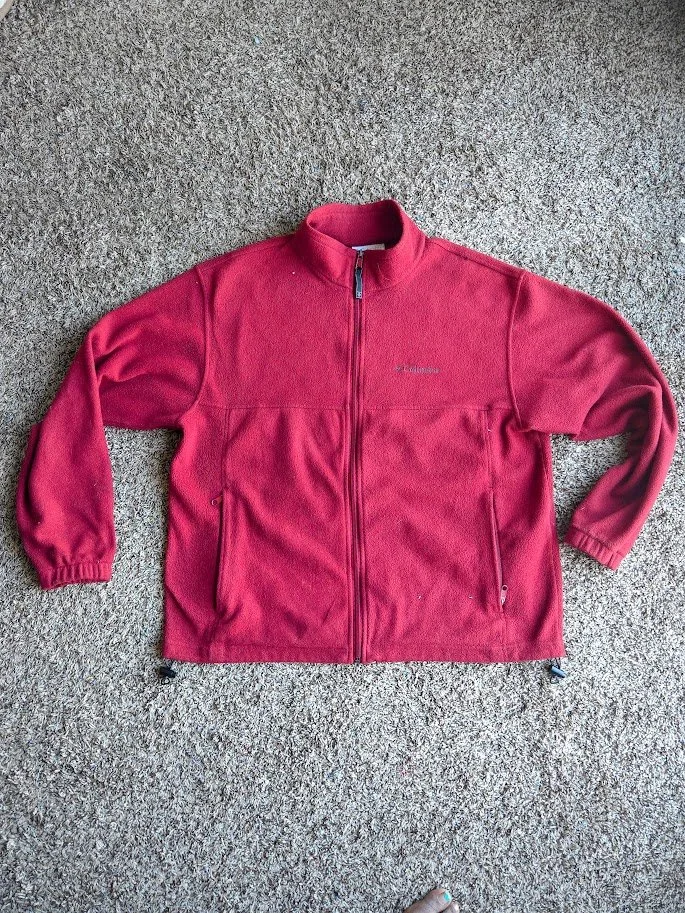
Pastor Jeff’s sweater jacket. According to Chris, it was a good quality piece of clothing and it had sentimental value to her.
After receiving the jacket in the mail and upon closer inspection, I could tell that it was well-worn and well-loved. Since this is a Columbia jacket, it is made of 100% polyester fleece, which is very soft and durable. According to Chris, this jacket was one of Pastor Jeff’s favorites and he would wear it often during his visitations and ministry. They also had matching jackets, which represent their 8 years of marriage. “I believe it will bring comfort and a smile to my face seeing this Cher Bear made from my husband’s jacket and lovely memories of him,” she said. With these facts and her direction, I got to work.
The Deconstruction Process
In my studio, I do a great deal of deconstructing and upcycling clothing for my work. There’s a difference between cutting a garment outright and carefully ripping the seams of the garment. I do the latter as I want to make sure I get the most out of the clothing while honoring its original design and narrative. So it is with the making of Chris’ Cher Bears.
Deconstruction is the systematic, highly controlled process of taking something apart. Unlike demolition, which is destructive in nature, deconstruction is an act of preservation. The aim is to harvest and save as much fabric as possible while maintaining the integrity of the original object. Upcycling, on the other hand, is the creative process of transforming those deconstructed materials into a new product of higher value or quality than the original. These two concepts go hand in hand together.
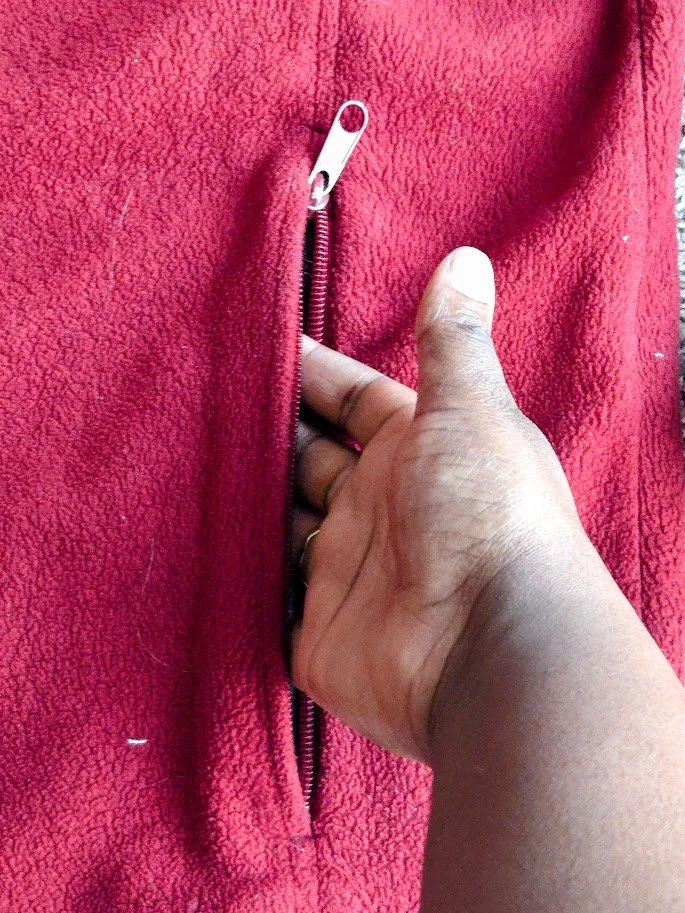
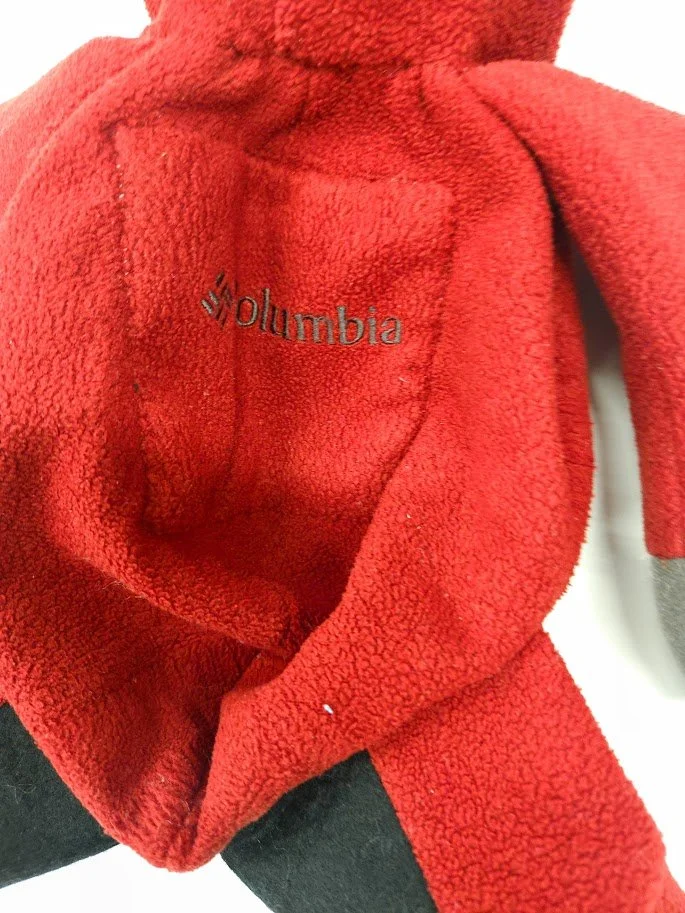
A close-up inspection of the jacket and its pockets, which Chris said were the most “lived in”.
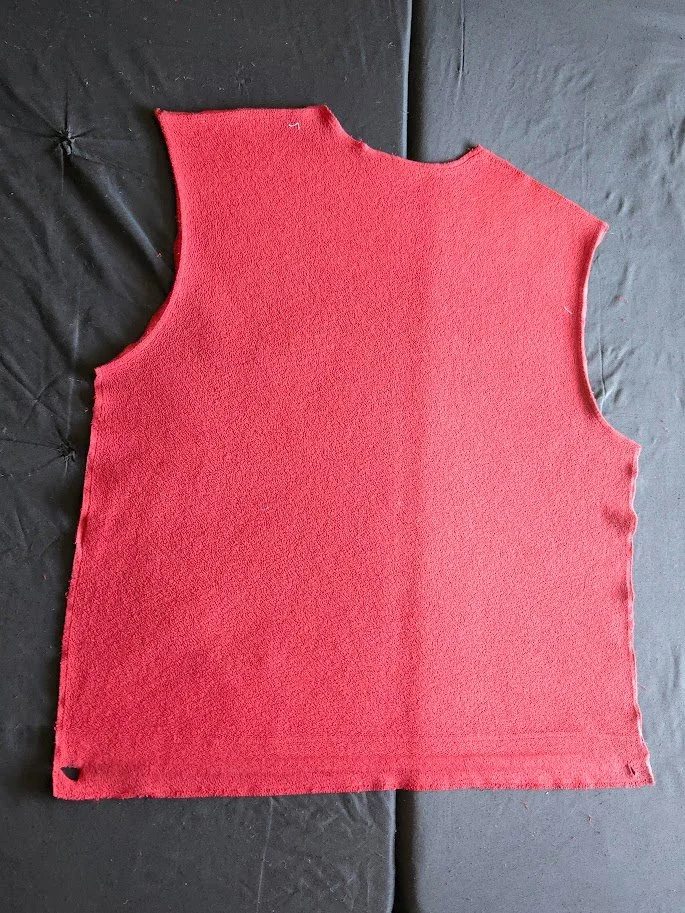
Pastor Jeff’s jacket after being taken apart. This is the back of the jacket, which would yield more than one Cher Bear.
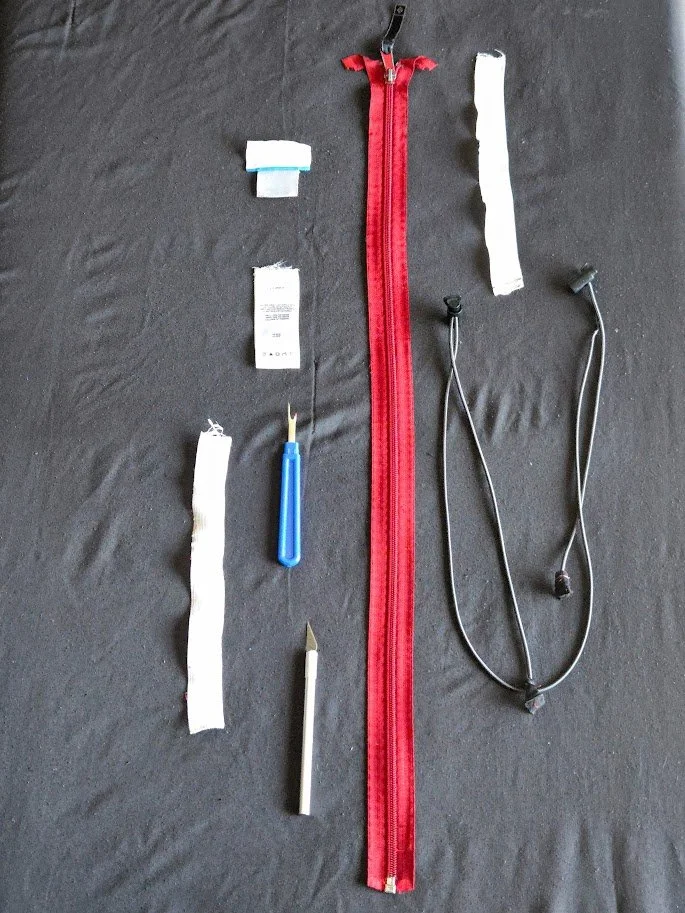
Notions that were from the jacket. When I deconstruct clothing, I always make sure to save the zippers and fasteners.
Tracing and Cutting
Once the jacket has been taken apart and prepped for crafting, I traced the bear patterns on the top of the deconstructed pieces and cut them. Since I’m working with fleece, I used apparel interfacing on the pieces to ensure the bears’ bodies do not stretch out too much and that they’re structurally stable. Fleece is notoriously tricky to work with as it is very thick and bulky!
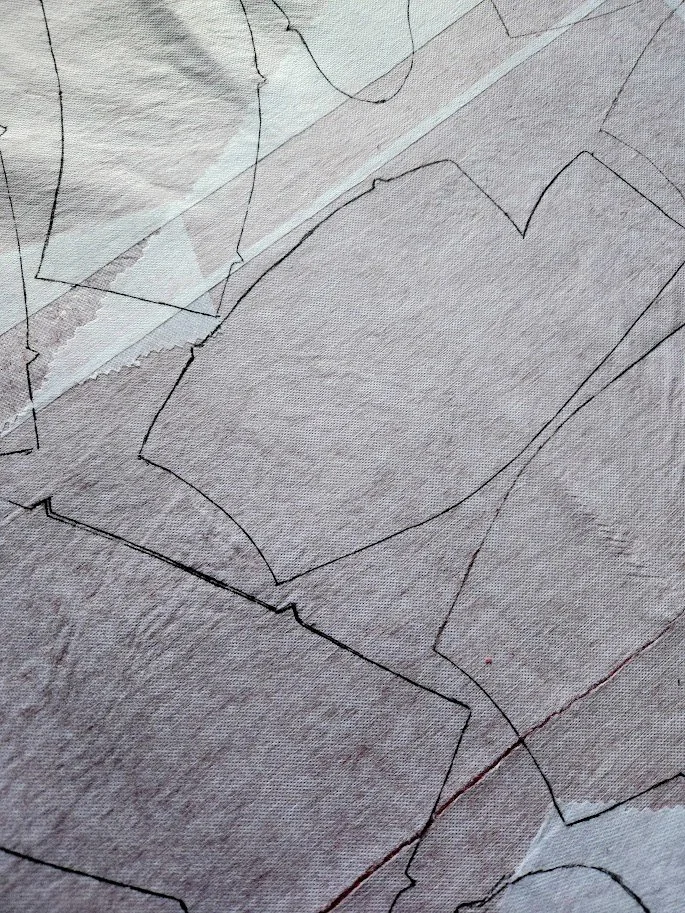
The bear patterns have been traced onto the back of the jacket pieces with apparel interfacing applied, ready for cutting.
Cutting out the bear pieces and arranging them.
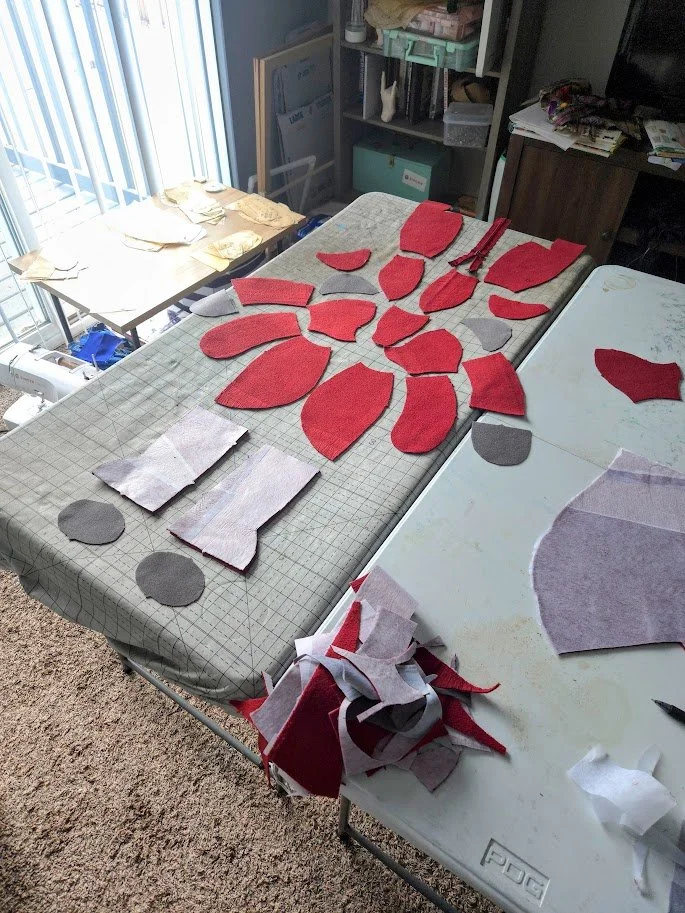
All the pieces have been cut from the jacket pieces and ready to be sewn together at my studio. As you can see, I still have plenty of leftovers for more Cher Bears!
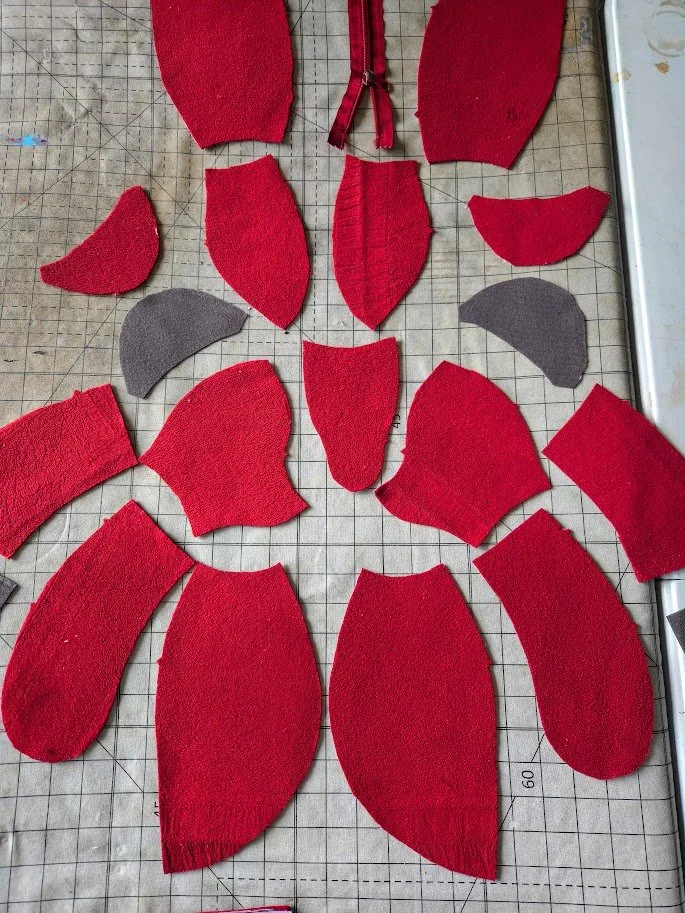
The bear pieces, cut from Pastor Jeff’s jacket. Note how the ears were cut from the inside of the jacket’s pockets.
Sewing
After having all my pieces cut, I went over to my trusty sewing machine to sew them together. This was my favorite part of the process: making the pieces come together to form a new work of art. This is where the upcycling process kicks in—after deconstruction, upcycling is where the beauty is really in the eye of the beholder!
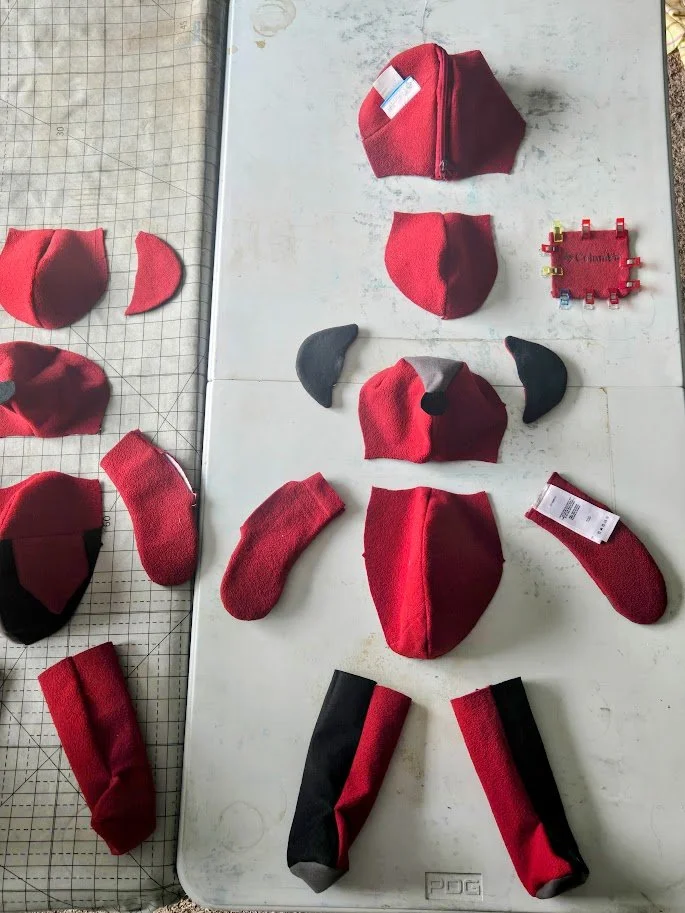
The bear pieces, sewn together to form Chris’ Cher Bears. As you can see, I’ve preserved the Columbia logo and other elements of the original jacket, per Chris’ request.
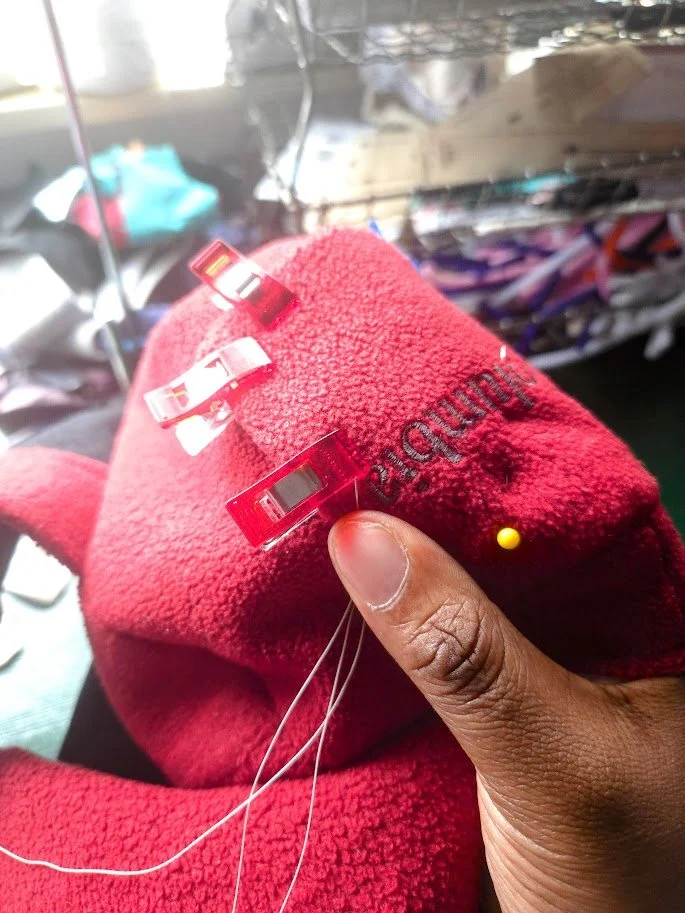
Hand stitching the Columbia logo into the front of one of the bears.
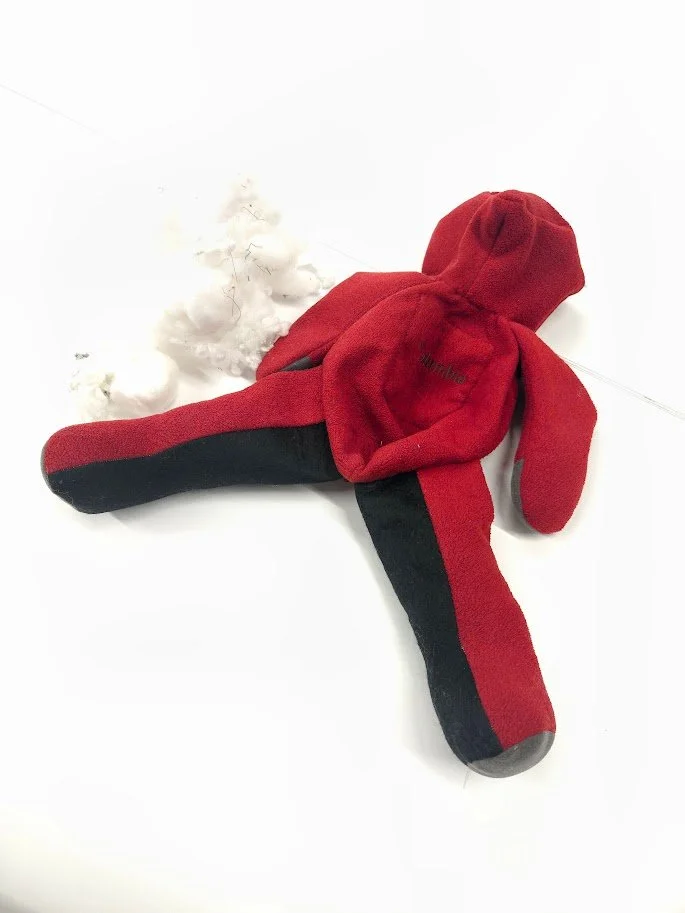
The finished Cher Bear, ready to be stuffed to life!
Close-up of the logo, finished with secure handstitching.
Pastor Jeff Revealed
After sewing and stuffing the bears, I couldn’t be more happier and proud with how they turned out. At first, I thought I would end up making one Cher Bear out of the whole jacket, but I found that I was able to yield not one, not two, but three 18” Cher Bears, making a family! While I did use additional fabric to complement the color scheme and design of the bears, Pastor Jeff’s jacket was large enough to make a family for the family. The third one, as of this writing, is in the works.
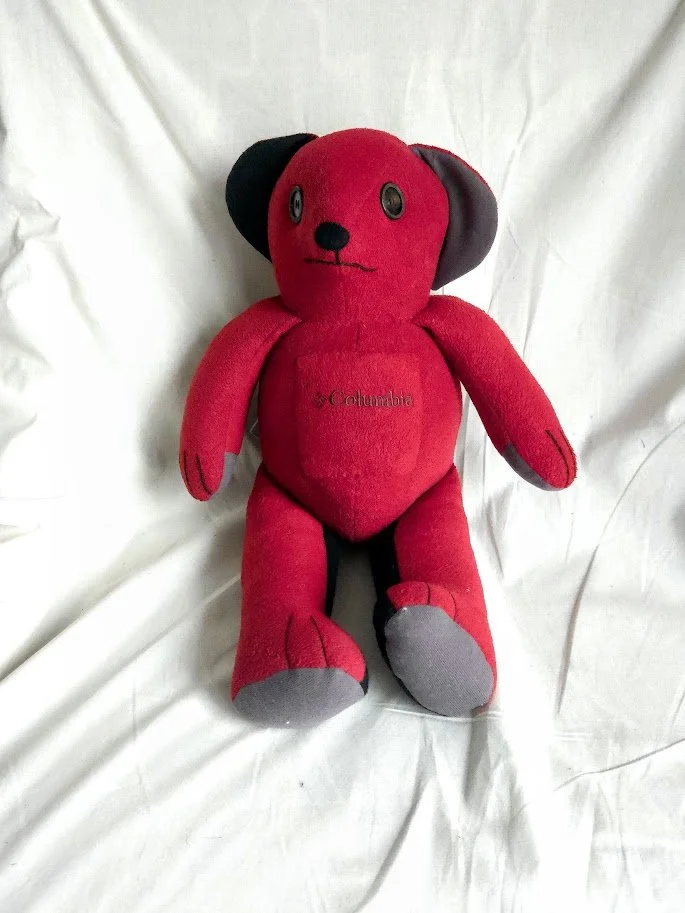
The finished Cher Bear, complete with the Columbia logo featured prominently on the front. Pastor Jeff, personified.
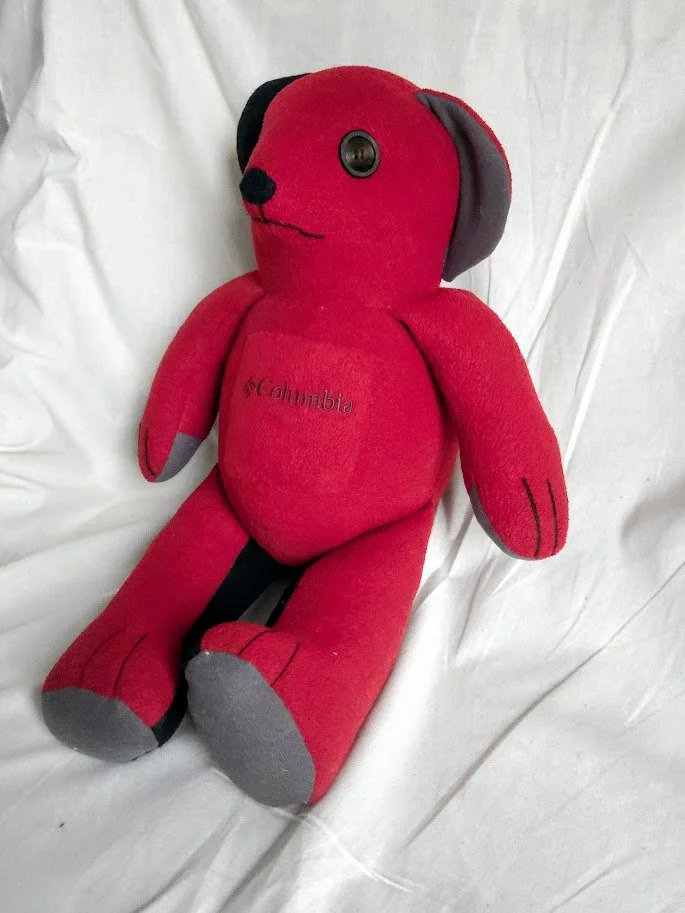
A quarter view of the Cher Bear, made from the original fleece sweater jacket.
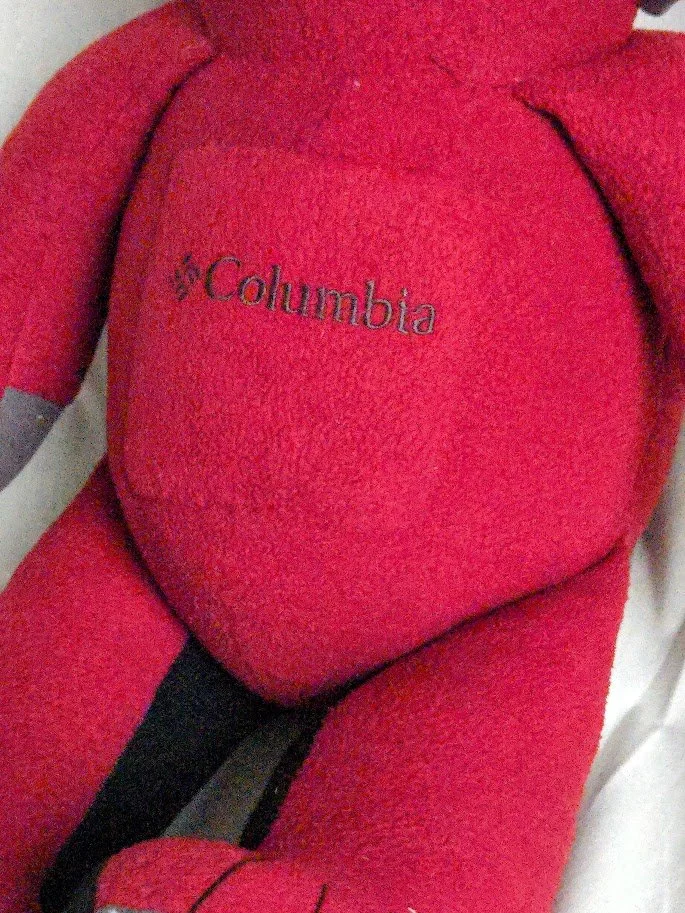
Kept the Columbia logo, as instructed!
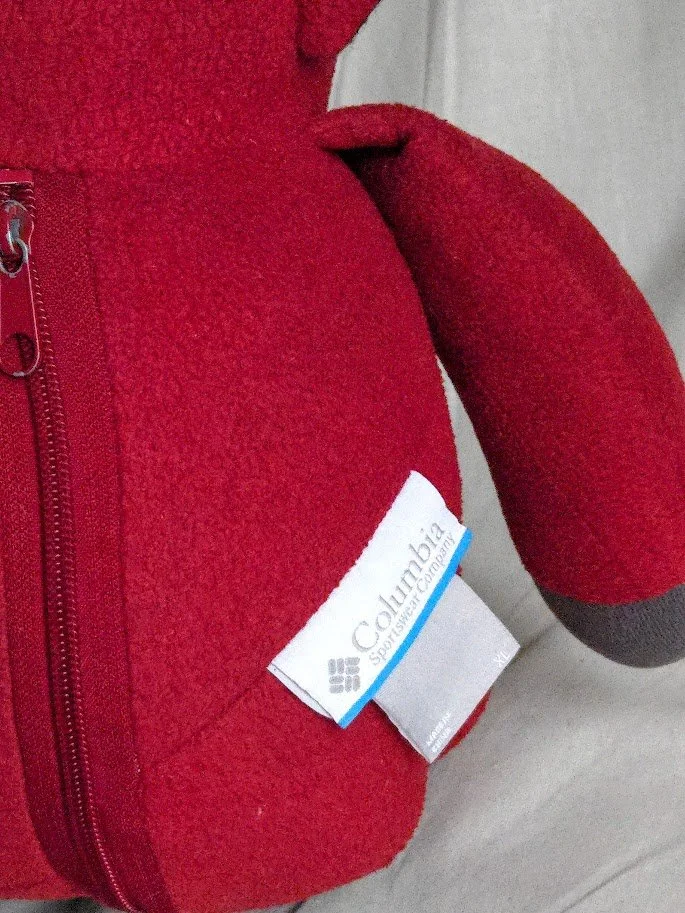
I added the original zipper and Columbia clothing tag to the Cher Bear as part of the design. In my deconstruction and upcycling process, I prefer to leave details like these intact.
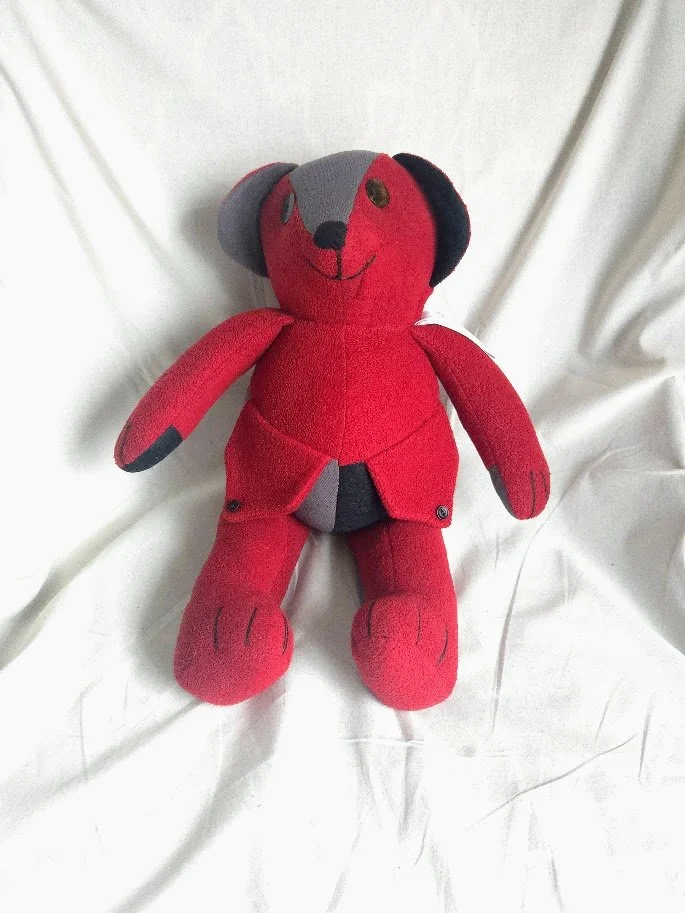
Cher Bear number 2. Since I had enough material from the first Cher Bear, I was able to make 2 more Cher Bears, making a family for Chris’ family.
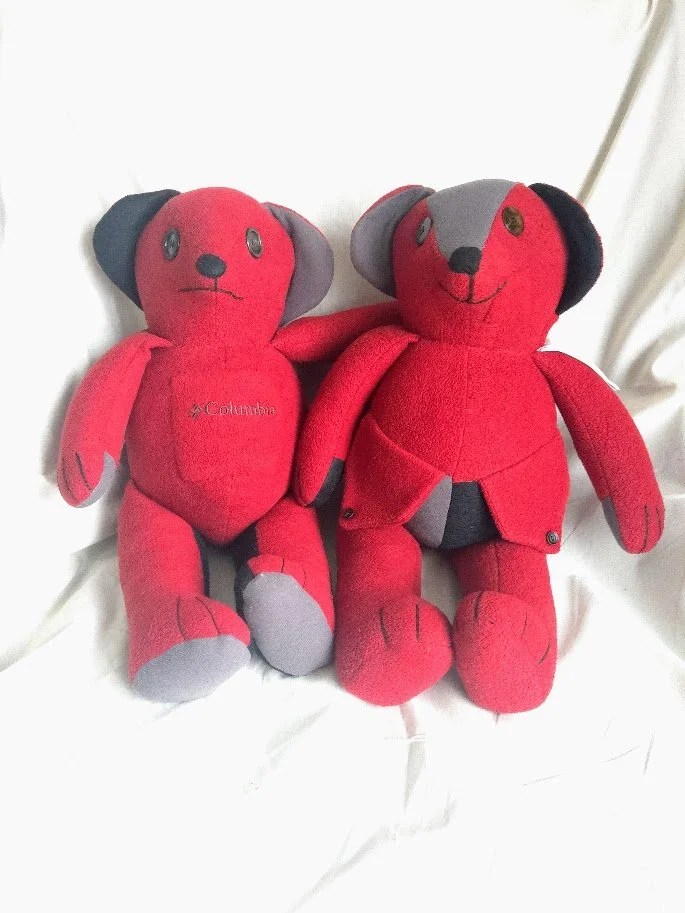
The two Cher Bears, together forever!
“I think it is a good way to remember someone and honor them...I am a big proponent of recycling things we no longer have a need for in our lives. it brings value to others.”
Research and Statistics of Upcycling, Textile Waste and Preservation
To the fashion industry, an older XL polyester fleece jacket might be viewed as a disposable unit nearing the end of its life cycle. But in my studio, this garment represented roughly 2.1 square yards of high-density memories. Before making a single cut, I conducted an audit of the sweater to map out exactly how to maximize its yield and preserve its human signature.
The data behind 100% polyester is sobering. According to the Organisation for Economic and Cooperative Development, it warns in its 2022 Global Plastics Outlook report that global plastic leakage into the environment is projected to double to 44 million tons per year by 2060 if current consumption trends continue, with textiles being a primary contributor of microplastics. By choosing to deconstruct and preserve the jacket, I was interrupting a cycle that ordinarily feeds into the 17 million tons of textile waste generated annually in the U.S.—a stream where the Environmental Protection Agency notes only 14.7% of materials are actually recycled.
Taking my scissors to the fleece for cutting out the bears was daunting, to be honest. There is a distinct physical and emotional resistance when cutting into a garment that carries so much history and memory. But by practicing upcycling and repairing our own clothing, we can do our part not only to prevent textiles from entering landfills, we also slow down our desire to throw away clothing that to the world, is useless and meaningless. Having seen and experienced first-hand what everyday materials can do when they’re given a second chance, I can say with absolute confidence that there are people out there who see the beauty in upcycled, artisanal crafts, especially those made in memory of loved ones. For me and Chris, this upcycling adventure is a masterclass in meaningful and purposeful storytelling through craft and design. It was a pleasure and an honor to get to know Pastor Jeff through his sweater and legacy.